
Laboratory of Ultrastructural and Functional Neuroanatomy of the Synapse
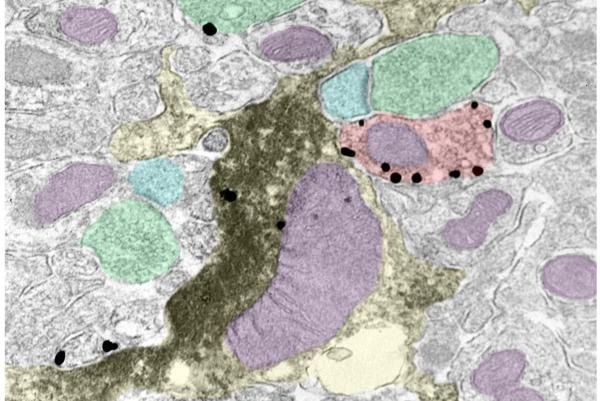
The main research interest of our laboratory is to understand the interactions between the endocannabinoid system with excitatory and inhibitory systems controlling neuronal circuits recruited in the physiological processing of high brain functions. Cannabinoid receptors play important roles in the functioning of the central nervous system, the normal and pathological brain ageing as well as in the development and initiation of abnormal behaviours and brain disorders. Therefore, our final goal is to gain knowledge about how disruption of neural circuits leads to disease conditions. In particular, we are focused on the molecular organization of the components integrating the endocannabinoid system, and on the study of the anatomical and functional interplays between this system and classical membrane receptors at excitatory and inhibitory synapses in key brain regions involved in stress, addiction and epilepsy. Also, we are committed to the comprehensive characterization of neural ion channel and receptor kinetics in the brain, by focusing on the anatomical and functional characterization of the cannabinoid CB1 receptors in astrocytes and in mitochondria (mtCB1R) of brain cells. Because of the importance of CB1 receptors, this knowledge is essential for obtaining a realistic and accurate model of the brain.
GLIAL MODULATION OF BRAIN STRUCTURE AND FUNCTION
APPROACHESWe have developed an interdisciplinary strategy combining electrophysiological, pharmacological and anatomical techniques applied to brain tissue of wild-type and genetically modified mice, and also to lesion-generated animal models of brain diseases.
The methods used and handled efficiently in the laboratory are: High resolution immunoelectron microscopy; Electrophysiology ex vivo in brain slices (extracellular field recordings and patch-clamp); Immunocytochemistry for conventional light and confocal microscopy; Tract-tracing; Behavioural tests; Organotypic cultures.
Researchers


Classifications
- Centers: Achucarro Basque Center for Neuroscience
beta
Prevailing specialties (top 10)
Obtained from publications help
Obtained from publications
The displayed thematic specialties have been obtained through the application of artificial intelligence models, derived as a result of the Hercules Project from those publications with an abstract, provided that the record does not come from commercial databases, which impose restrictions on data usage.
The displayed thematic specialties have been obtained through the application of artificial intelligence models, derived as a result of the Hercules Project from those publications with an abstract, provided that the record does not come from commercial databases, which impose restrictions on data usage.
- Biological Psychiatry (Neuroscience) Filter
- Education (Social Sciences) Filter
- Medicine (miscellaneous) (Medicine) Filter
- Psychiatry (Medicine) Filter
- Anesthesiology (Medicine) Filter
- Applied Psychology (Psychology) Filter
- Communication (Social Sciences) Filter
- General Medicine (Medicine) Filter
- Language and Linguistics (Arts and Humanities) Filter
- Linguistics and Language (Social Sciences) Filter
Historical member list (17) Includes all members who have been part of the group, both current (●) and past (○).
- Almudena Ramos Uriarte
- Amaia Mimenza Saiz
- Garazi Ocerin Amondarain
- Ilazki Anaut
- Inma Gerrikagoitia Marina
- Itziar Bonilla
- Leire Reguero Acebal
- Maitane Serrano
- Nagore Puente Bustinza
- Pedro Grandes Moreno Leader
- Rafael Sarría Arostegui
- Sonia Gómez Urquijo
- Xabier Arechabala Rodriguez
- Irantzu Rico Barrio
- Izaskun Elezgarai Gabantxo
- Jon Egaña Huguet
- Juan Luis Mendizabal Zubiaga